Wedding Attire for Men: What to wear for Every Dress Code?
The right wedding attire starts with the dress code. Black Tie calls for formal eveningwear, while Formal, Cocktail and Smart Casual dress codes allow progressively more flexibility. But the dress code is only the starting point. Your role in the wedding, the venue, time of day, season and weather can all influence how that dress code should be interpreted. This guide will help you bring those elements together and find the right level of formality, whether you are attending a traditional morning-dress wedding, a black-tie evening reception or something more relaxed in summer or in a garden setting.
This guide is for you if…
01 - “I have a wedding coming up and I’m not sure how formal I should dress.”
02 - “There’s no clear dress code, and I don’t want to be underdressed or overdressed.”
03 - “I know the dress code, but I’m not sure what it actually means for my outfit.”
04 - “I want to look right for the occasion without feeling like I’m dressed as someone else.”
Men's wedding attire at a glance
This table provides a starting point. The final outfit should then be adapted to your role, the venue, time of day and conditions.
Table of Contents
- How to Decide What to Wear to a Wedding
- Wedding Attire for Men by Dress Code
- Wedding Attire by Season, Setting and Occasion
- Wedding Attire by Role
- Choosing Colours and Fabrics for a Wedding
- Wedding Shoes and Accessories
- What Not to Wear to a Wedding
- FAQ - Wedding Attire for Men
How to decide what to wear to a wedding?
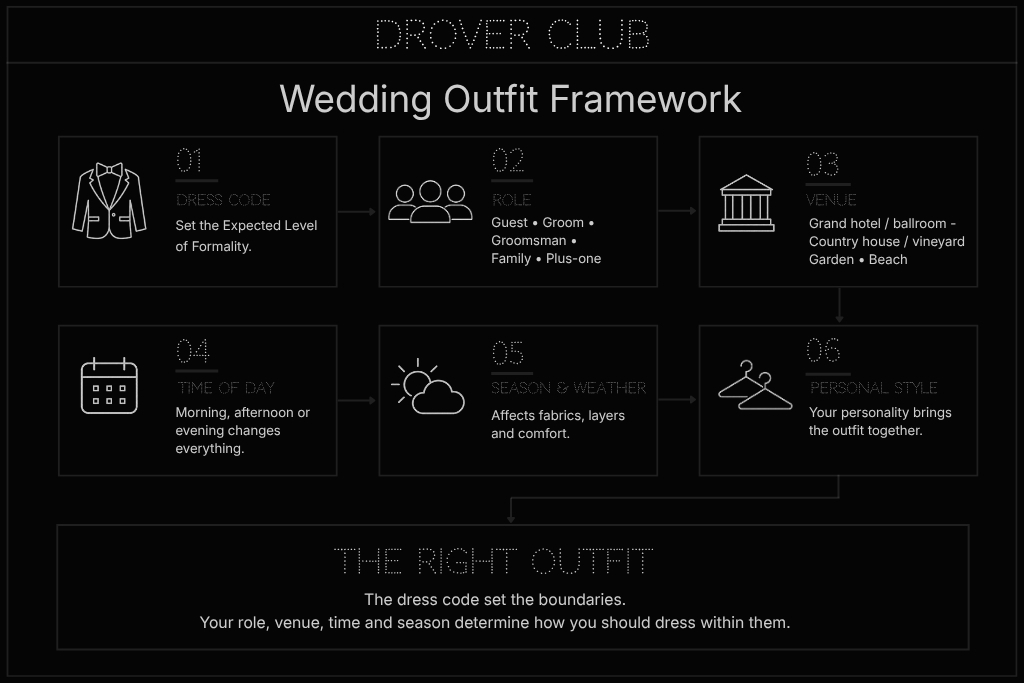
No single factor determines the outfit. The right direction comes from how they work together. The dress code on the invitation is the first thing to consider, but it does not always determine the entire outfit. Two weddings with the same dress code may call for different choices depending on your role, the venue, the time of day and the conditions. The best approach is therefore to consider these elements together rather than in isolation.
Start with the dress code
Always start with the dress code stated on the invitation. It sets the expected level of formality and defines the framework within which the outfit can develop. A black-tie wedding should not be interpreted simply as an elegant wedding, just as a casual dress code does not mean that anything goes. Some terms can, however, be used differently depending on the country, venue or couple. If the wording feels unusual or ambiguous, it is better to ask for clarification than to make an uncertain interpretation. The dress code sets the framework, but not necessarily the complete outfit.
Consider your role
Your role in the wedding also influences what you wear. A guest should primarily respect the dress code and fit naturally into the occasion. The groom, best man or close members of the family may need to coordinate with others or distinguish themselves slightly. The question is therefore not only “What is the dress code?”, but also “What is my role in this wedding?”.
Look at the venue
The venue helps refine how you interpret the dress code. A wedding held in a grand hotel, stately home or formal ballroom will generally support a more structured approach than one taking place in a garden, on a beach or at a country house. The setting can influence the fabrics, jacket construction and footwear in particular.
The venue helps refine the outfit, but it does not override an explicit dress code.
Consider the time of day
The time of the ceremony and reception can also influence the outfit. Daytime weddings often allow more scope for lighter colours and textures, while an evening wedding may naturally accommodate darker or more formal clothing. In particularly formal British settings, time of day can even form part of the dress code itself: morning dress is traditionally associated with formal daytime occasions, while black tie is eveningwear. Time should still be treated as context rather than as an automatic rule that light colours belong in the day and dark colours at night.
Check the season and weather
The season does not determine the level of formality, but it does influence how you respond to it. A suit that works perfectly for a December wedding may be uncomfortable in July even when the dress code is identical.
Consider:
- temperature;
- humidity;
- rain;
- whether the wedding is indoors, outdoors or both;
- fabric weight and breathability;
- changes in temperature between the ceremony and evening reception.
Adapt the fabric and construction to the conditions, rather than changing the level of formality itself.
Keep your personal style in the equation
An outfit can be perfectly correct on paper and still feel wrong for the person wearing it. Once the requirements of the wedding are clear, the next step is to choose an interpretation that suits the way you normally dress and your comfort level with colour, fit and accessories. The aim is not to work around the dress code, but to find the right version of that dress code for you. The right outfit should respect the occasion without making you feel like someone else.
Wedding attire for men by dress code
The dress code establishes the expected level of formality. Some codes, such as white tie, morning dress and black tie, follow precise conventions. Others leave more room for interpretation. Here is what each one generally means for men.
White tie
White tie is the most formal evening dress code and remains relatively rare for weddings. When explicitly requested, it calls for highly codified eveningwear: a black tailcoat, matching formal trousers, white waistcoat, formal evening shirt, white bow tie and formal black shoes. This is not a dress code to interpret freely. When white tie is requested, the priority is to follow its traditional conventions.
Outfit formula: Black evening tailcoat + formal trousers + white waistcoat + white evening shirt + white bow tie + formal black shoes.
Morning dress
Morning dress is traditional formal daytime attire associated particularly in Britain with weddings and other ceremonial occasions. It generally consists of a morning coat, waistcoat, formal striped or subtly patterned trousers, shirt, tie and polished black shoes. It should be worn when the invitation or context clearly calls for it. Morning dress is not simply a more elegant version of a conventional suit, but a distinct dress code with its own conventions.
Outfit formula: Morning coat + waistcoat + formal striped trousers + shirt + tie + polished black shoes.
Black tie wedding attire
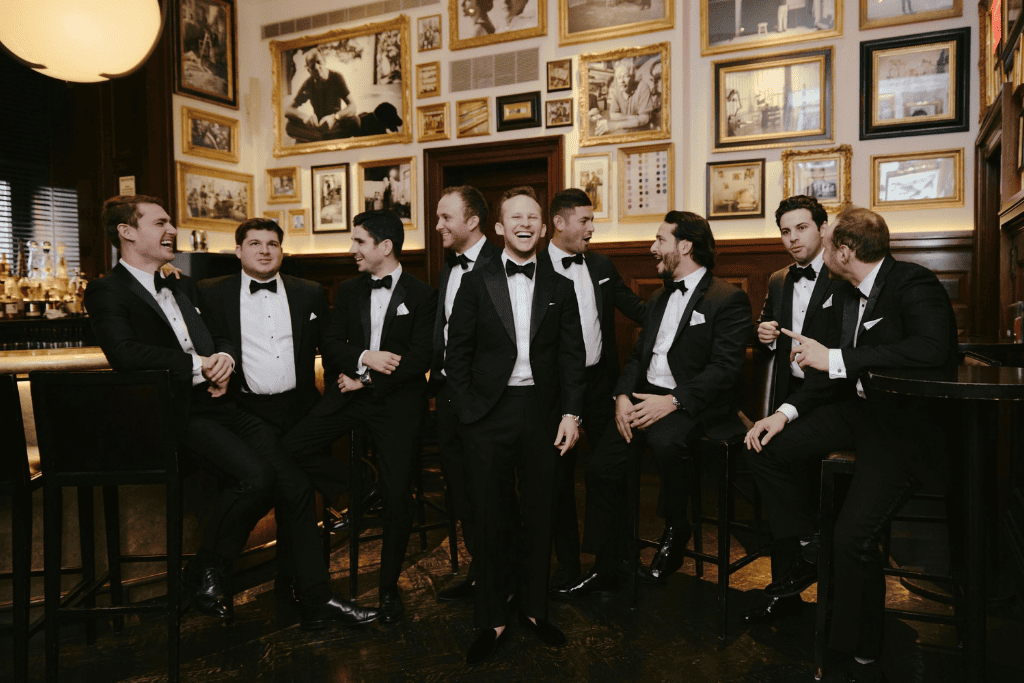
Black tie is a formal evening dress code. For men, it generally means a black or midnight-blue dinner jacket, matching evening trousers, a white evening shirt, black bow tie and formal black shoes. A conventional dark suit does not automatically qualify as black tie. The distinction lies in the cut and details of the dinner jacket, the evening shirt and the accessories worn with it.
Outfit formula: Dinner jacket + evening trousers + white evening shirt + black bow tie + formal black shoes
See one complete outfit for a black tie wedding → What to Wear to a Black Tie Wedding?
Black tie optional
Black tie optional offers more flexibility. A dinner jacket remains completely appropriate, but a sufficiently formal dark suit is also acceptable. If you choose a suit, a deep navy or charcoal option with a light dress shirt, tie and formal shoes will generally work well. The word optional does not mean that formality itself is optional. It means primarily that a dinner jacket is not compulsory.
Outfit formula: Dinner jacket OR dark formal suit + dress shirt + appropriate neckwear + formal shoes.
Formal wedding attire
For a formal wedding, a well-cut suit is generally the safest starting point. Navy, charcoal or certain understated seasonal colours can work depending on the time, venue and season, paired with a dress shirt, tie and polished leather shoes. The outfit should feel clearly considered for a special occasion rather than simply reproduce what you might wear to the office. At particularly traditional British daytime weddings, the invitation may specify a more precise formal dress code such as morning dress.
Outfit formula: Refined suit + dress shirt + tie + polished leather shoes.
Cocktail wedding attire
Cocktail attire allows more freedom than formal dress while still remaining distinctly smart. A suit is generally an excellent foundation, but there is greater scope to introduce colour, texture and more expressive accessories. Depending on the wedding, a tie may be expected or optional. Refined loafers can also work in place of Oxfords or Derbies where the setting allows.
Outfit formula: Suit + dress shirt + contextual tie + Oxfords, Derbies or refined loafers.
Smart casual wedding attire
Smart casual for a wedding should generally feel more considered than everyday smart casual. It allows you to move away from a full suit, but not necessarily from tailoring altogether. A blazer or unstructured jacket can be paired with tailored trousers, a shirt or refined knitwear and loafers, Derbies or appropriate suede footwear. As the rules become less prescriptive, the relationship between each piece becomes even more important.
Outfit formula: Blazer or relaxed tailoring + tailored trousers + collared shirt or refined knit + loafers or Derbies.
Casual wedding attire
A casual wedding allows for a more relaxed approach, but casual should not be confused with everyday clothing. Well-chosen separates, tailored trousers, a shirt, refined polo or lightweight jacket can all work depending on the venue and season. Footwear may also be more relaxed, provided it still feels appropriate for the occasion.
Outfit formula: Considered separates + collared shirt or refined knit + tailored trousers + appropriate casual footwear.
What if there is no dress code?
When no dress code is given, work out the expected level of formality from the context rather than choosing an outfit at random.
Look at:
- the venue;
- the time of day;
- the style of the invitation;
- the type of ceremony;
- the season and weather;
- the overall style of the wedding;
- any guidance provided by the couple.
If none of these gives you a clear answer, a well-cut navy or charcoal suit with a light shirt and polished leather shoes is a safe starting point for many traditional weddings. The tie, footwear, fabrics and accessories can then be used to adjust the outfit slightly up or down in formality.
A safe wedding outfit when the dress code isn't clear

A dependable wedding look built around a navy single-breasted wool suit and crisp white twill shirt, finished with a polka dot tie, black leather belt, plain-toe leather shoes and a navy-bordered pocket square for a classic, well-balanced finish.
Wedding Attire by season, setting and occasion
Once the level of formality is clear, the season and setting help adapt the outfit to the actual conditions. Fabric, construction, footwear and colour palette can all change without altering the underlying dress code.
Summer weddings
A summer wedding generally calls for more breathable fabrics and lighter construction. Linen, certain blends, tropical wool and other lightweight materials can all be useful depending on the expected level of formality. Colours can also become softer or lighter during the day. That does not mean a summer wedding is necessarily casual: a formal or black-tie dress code remains formal even in warm weather.
See one complete outfit for a summer wedding → What to Wear to a Summer Wedding?
Winter weddings
In winter, an outfit can take on more texture, depth and layering. Heavier wools, flannel, textured fabrics and richer colours can work particularly well. Think about the entire day too, including arrival, the ceremony and any time spent outdoors. An appropriate coat can therefore form part of the outfit rather than being treated simply as a practical extra.
See one complete outfit for a winter wedding → What to Wear to a Winter Wedding?
Beach weddings
A beach wedding often calls for a lighter approach, but a beach wedding is not automatically beachwear. Heat, humidity, wind and terrain may justify breathable fabrics, softer jacket construction and footwear better suited to the location. The requested level of formality should still remain the starting point.
See one complete outfit for a beach wedding → What to Wear to a Beach Wedding?
Garden weddings
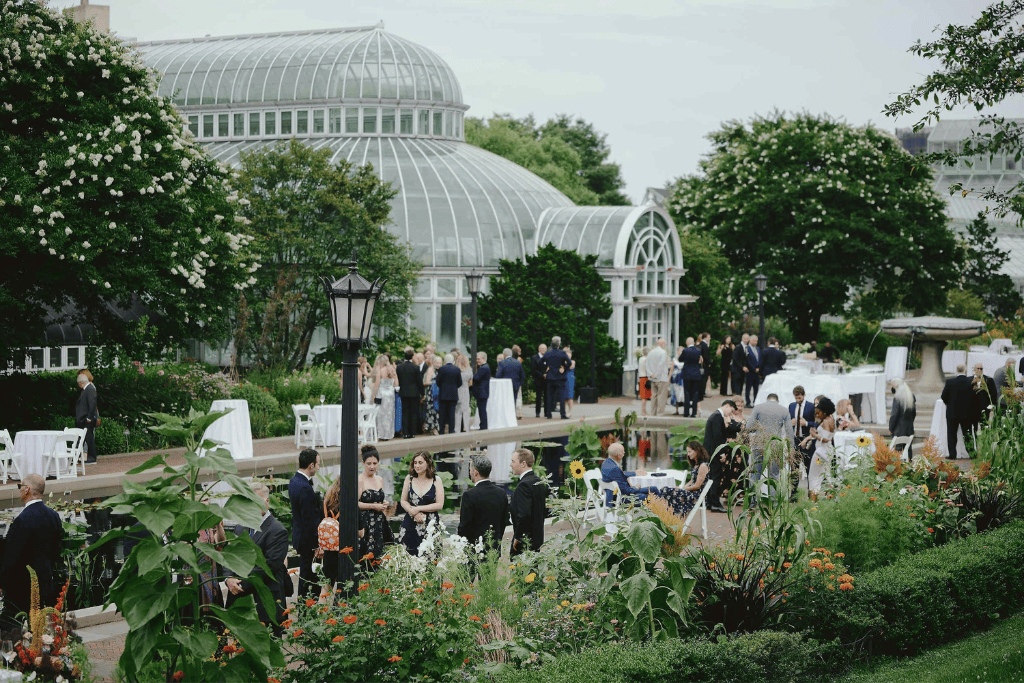
Garden weddings often allow more flexibility in texture, colour and construction. A softer jacket, more relaxed fabrics or suede footwear can work well depending on the dress code and season. The terrain also deserves consideration: shoes that are perfectly suited to a ballroom may be far less practical on grass or uneven ground.
See one complete outfit for a garden wedding → What to Wear to a Garden Wedding?
Wedding reception
A wedding reception can call for a slightly different approach from the ceremony itself, particularly when the evening becomes more relaxed or when guests are joining only for the reception. The invitation, venue and time of day should still determine the level of formality, rather than assuming the reception automatically means dressing down.
See one complete outfit for a wedding reception → What to Wear to a Wedding Reception?
Destination weddings
Destination describes where the wedding takes place, not how formal it is. A wedding abroad can be every bit as formal as one held closer to home. Start with the dress code, then adapt the fabrics, construction and accessories to the climate, venue and practicalities of travelling.
Explore Wedding Outfits by Setting
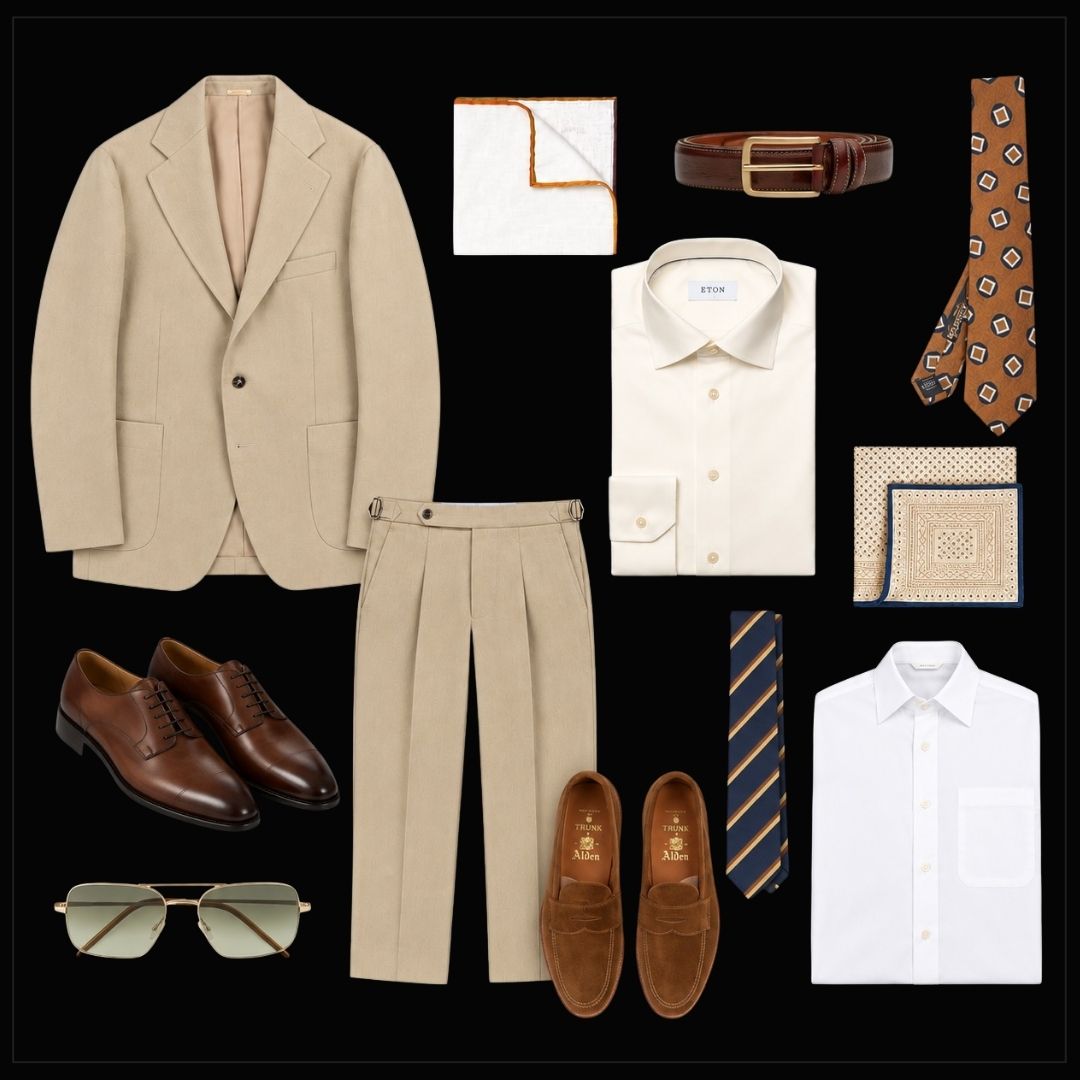
Summer Wedding
See the outfit →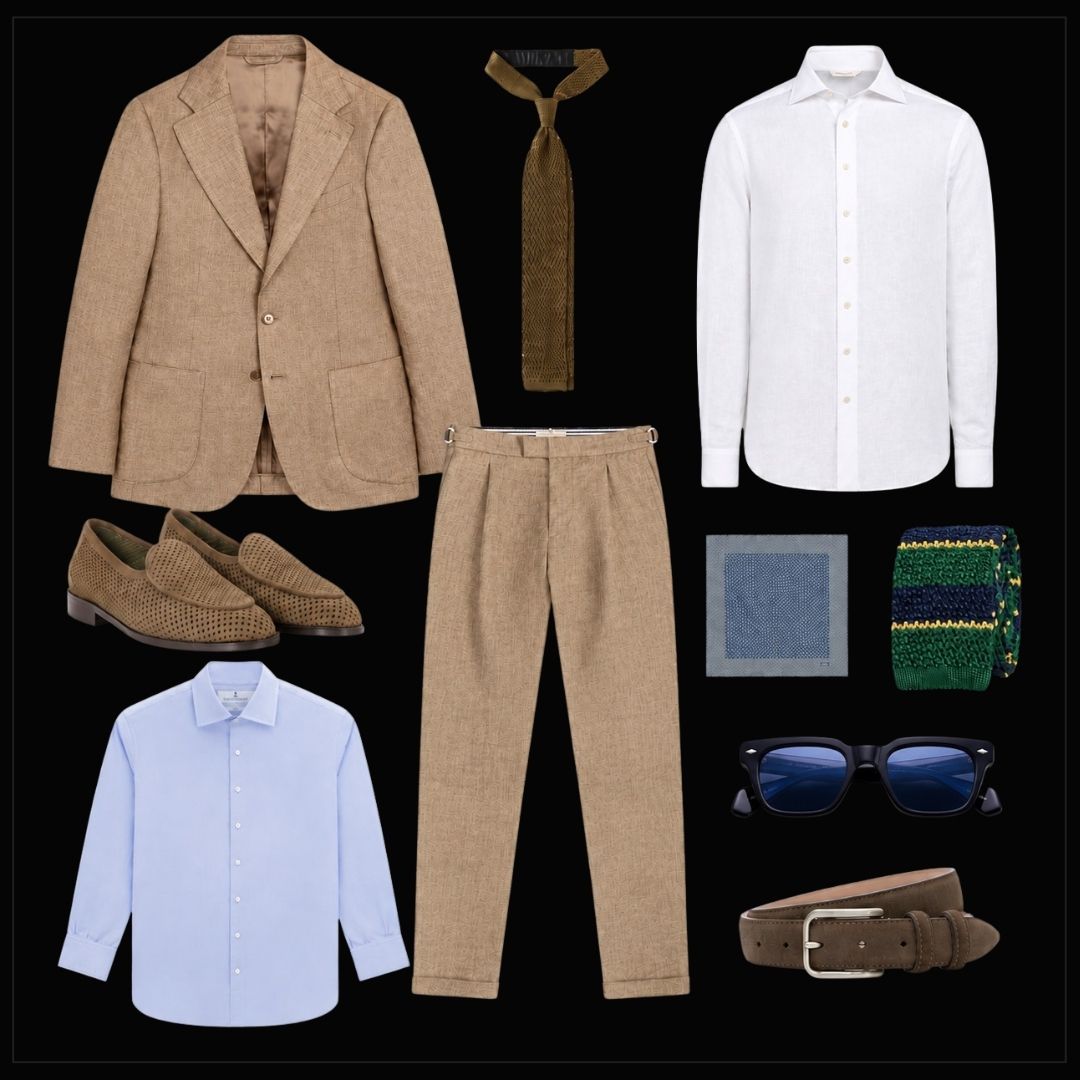
Beach Wedding
See the outfit →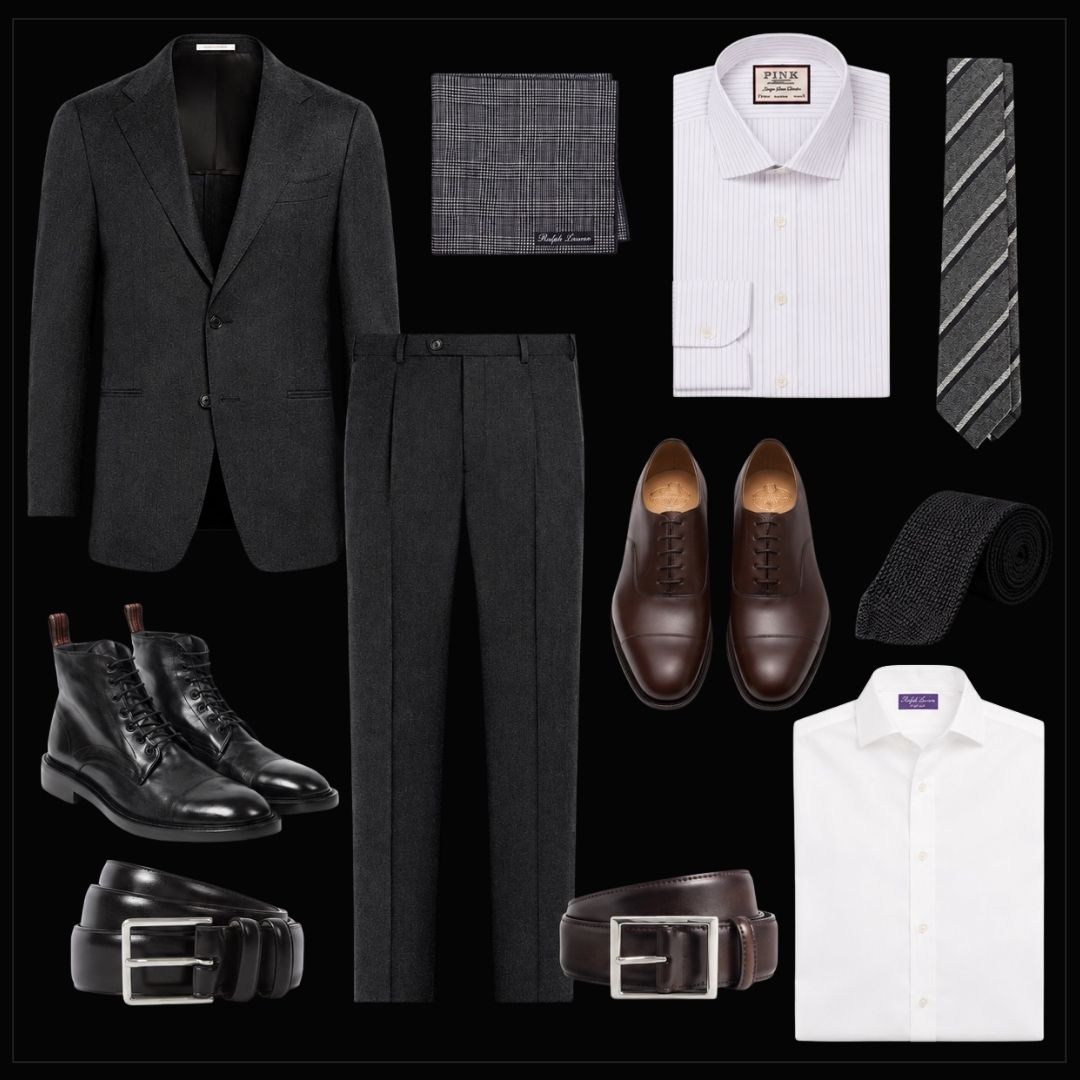
Winter Wedding
See the outfit →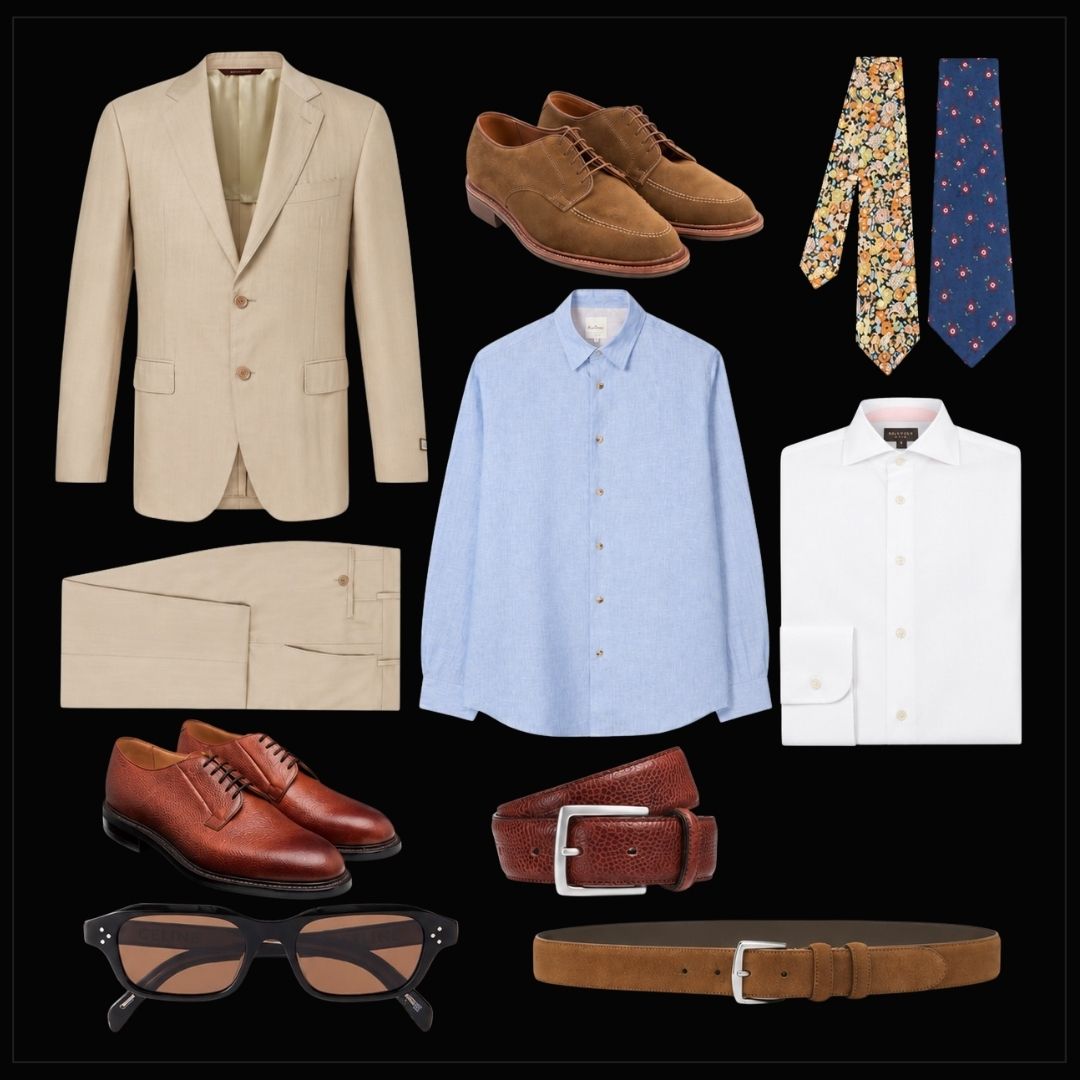
Garden Wedding
See the outfit →
Wedding Reception
See the outfit →
Wedding Attire by role
The dress code remains the starting point, but your role can influence how you interpret it. A guest mainly needs to dress appropriately for the occasion, while the groom or members of the wedding party may need to stand out or coordinate more deliberately.
Wedding guest
As a guest, your priority is to respect the dress code and look appropriately dressed without trying to become the visual focus of the wedding. There is generally no need to match your colours to those of the wedding party unless the couple has specifically asked you to. The aim is simple: look right for the wedding without making the outfit feel as though it is competing with the occasion itself.
Groom
The groom naturally has more freedom to stand out. His outfit may introduce a different colour, texture or accessory, but it should still make sense alongside the venue, time of day, dress code and overall wedding. The best approach is not necessarily to choose the most dramatic outfit, but one that allows the groom to stand out naturally while remaining coherent with the occasion.
Best man and groomsmen
For the best man and groomsmen, coordination with the groom will generally matter more than individual expression. Depending on the wedding, this might mean wearing the same outfit, using the same suit with different accessories or simply following a shared colour palette and level of formality. Where the couple provides specific instructions, those should take priority.
Father of the bride or groom
The father of the bride or groom should generally follow the same level of formality as the wedding while remaining coherent with the groom and wedding party. A subtle difference in colour, tie, waistcoat or accessories can create distinction without competing with the groom.
Choosing colours and fabrics for a wedding
Once the level of formality is established, colour and fabric help adapt the outfit to the specific occasion. The right choices depend on the dress code, time of day, season, venue and the other pieces in the outfit.
Choosing the right colours
Dark, understated colours work naturally in more formal settings, while daytime weddings and warmer seasons often allow more flexibility.
Treat this table as guidance rather than a fixed set of rules. A lighter suit can work at certain formal daytime weddings, just as a dark suit can remain appropriate in summer. Colour should also work with the shirt, tie, shoes and accessories. A coherent palette often matters more than choosing one supposedly “perfect” colour in isolation.
Can men wear black to a wedding?
Yes, black can work well at a wedding, particularly in formal or evening settings. It is, however, less universally useful than navy or charcoal for some daytime, summer or more relaxed weddings. Cultural context and the preferences of the couple should also be taken into account. Black is therefore neither forbidden nor automatically appropriate: it depends on the context.
Choosing the right fabrics
Fabric influences comfort, structure and how formal the outfit feels. It needs to work with the dress code as well as the actual conditions of the wedding.
Warm-Weather Options
- Lightweight wool - retains structure while keeping the outfit lighter.
- Tropical wool - particularly useful when formality needs to be maintained in warm conditions.
- Linen - breathable, but naturally softer and more prone to creasing.
- Linen blends - often provide more structure than pure linen.
- Wool-silk-linen blends - can add texture and lightness in the right setting.
Cooler-Weather Options
- Wool - versatile and suitable across many levels of formality.
- Flannel - softer and more textured for colder temperatures.
- Textured wool - adds depth to autumn and winter outfits.
- Heavier tailoring fabrics - provide additional warmth and structure.
Formal Evening Options
For the most formal evening weddings, fabrics with a more refined finish generally work better than very rustic textures. Velvet can have its place in certain settings, but only where it genuinely makes sense within the dress code. The fabric should support both the dress code and the conditions of the wedding.
Wedding shoes and accessories

Shoes and accessories should support the outfit rather than dominate it. Their suitability depends on the level of formality as well as the venue and terrain.
What shoes should men wear to a wedding?
The more formal the dress code, the more understated and refined the footwear should generally become. At more relaxed weddings, there is greater scope for texture, softer construction and suede.
The venue should then act as an additional filter. A highly formal shoe that is impractical on grass, sand or uneven ground is not necessarily the right choice. The right shoe needs to work with the level of formality, but also with where you are actually going to wear it.
Do you need to wear a tie?
Whether you need a tie depends primarily on the dress code.
In practice:
- Black tie → black bow tie.
- Formal → a tie is generally expected.
- Cocktail → depends on the context and overall outfit.
- Smart casual → often optional.
- Casual → generally optional unless specifically requested.
If you choose not to wear a tie, the rest of the outfit still needs to feel considered. Removing the tie should make the outfit more relaxed, not unfinished.
Pocket squares, watches and other accessories
Accessories allow you to introduce personality without changing the overall level of formality. A pocket square can add colour or texture without needing to match the tie exactly. A discreet watch works in many settings, while jewellery and cufflinks should remain coherent with the rest of the outfit. As the dress code becomes more formal, accessories generally benefit from becoming more restrained. Accessories should complete the outfit rather than become its focal point.
What not to wear to a wedding?
Even with a relatively flexible dress code, certain choices can quickly make an outfit feel inappropriate.
Don't:
- Ignore the stated dress code. If the invitation says black tie, formal or cocktail, start there before considering anything else.
- Dress noticeably below the expected level of formality. An outfit that is clearly too casual can quickly suggest that the context has not been taken into account.
- Treat “casual” as everyday casual. A casual wedding is still a wedding. Worn jeans, old trainers or a basic T-shirt can easily feel too ordinary.
- Wear footwear that does not suit the setting. Consider grass, sand or uneven ground when choosing your shoes.
- Choose fabrics that make no sense for the weather. An outfit can be theoretically correct and still be completely wrong for the actual conditions.
- Deliberately copy the wedding party when you have not been asked to. Avoid reproducing the exact colours or accessories of the groomsmen unless the couple has asked you to.
- Turn the outfit into a collection of statement pieces. One or two details can add character. Every piece does not need to compete for attention.
- Assume a standard office outfit is automatically suitable. A business suit can be a useful starting point, but it may need adjusting to feel genuinely appropriate for a wedding.
- Ignore cultural or religious expectations. Some ceremonies have specific traditions or requirements that should take priority.
The aim is not to follow a rigid list of prohibitions, but to choose an outfit that shows the context of the wedding has actually been considered.
There is no single wedding outfit that works for every man or every occasion. Start with the dress code, then use your role, the venue, time of day, season and weather to work out the right direction. Once those constraints are understood, the best outfit is one that respects the wedding while still feeling consistent with the way you dress.
About Drover Club
Drover Club is a men’s online styling service that helps men dress right for the moments that matter. For weddings, business events, black-tie evenings, cocktail parties and other special occasions, we curate complete, ready-to-shop outfits from different brands, based on your style preferences, budget, sizes and existing wardrobe.